Cordoba
Our hotel in Cordoba was a short walk from the restaurants and old town and as soon as we checked in we began to explore. We were soon wandering along cobbled roads and alleyways, with glimpses into cool, relaxing courtyards, decorated with Muslim style ceramics, palms and other plants and sometimes water features. Houses in this part of Spain have been built around internal courtyards such as these for centuries. Even walking past them and glimpsing them through doors and windows gave a sense of peace and safety from the outside world. Since it was the eve of a national holiday, the cafes and shops were busy with Spanish holidaymakers. We made our way down to the old bridge, originally built by the Romans, from where we could see the remains of some old mills and a water wheel and listen to buskers playing traditional music. Even though we were now in Andalusia, the lure of Galician seafood was too strong (rationalising that we had 3 nights in Cordoba, so plenty of time to sample the local delicacies) and we had a great meal of octopus and beef. Once again, the lack of a common language was not a problem with the very genial chef helping us to order.
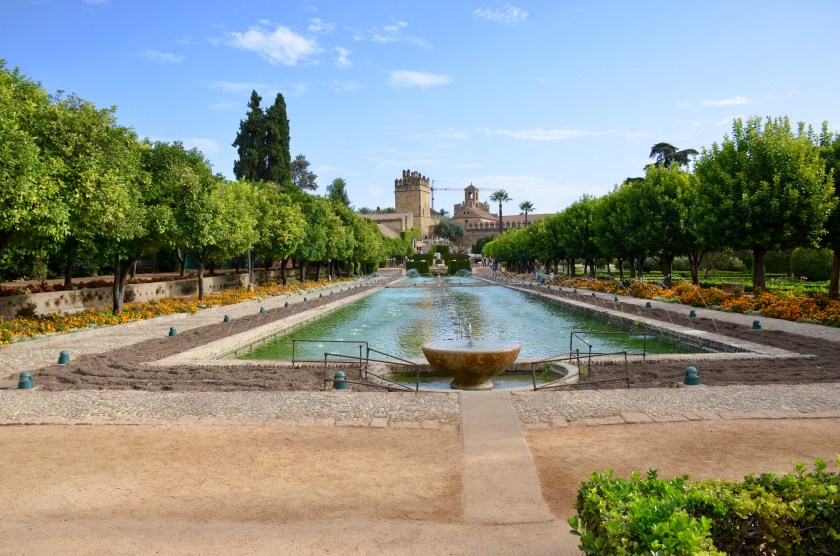
Originally, we had planned to visit Alhambra while we were in Cordoba. However, tickets had sold out long ago, probably because of the national holiday, so instead, we found a guide for a full day tour of Cordoba for the following day and bought train tickets for a day trip to Seville for the day after that. Our tour of Cordoba started with a visit to Alcazar de los Reyes Cristianos, translated as “Castle of the Christian Monarchs”, which dates to the Visigoths. It was occupied by the Umayyad Caliphate during the Muslim conquest and then re-occupied by Christians during the Reconquista in the 13th century and rebuilt by Alfonso XI of Castile in 1328. Later, the castle was used by the tribunal for the Spanish Inquisition (https://en.wikipedia.org/wiki/Alcázar_de_los_Reyes_Cristianos). As well as displays from the Visigoth, Muslim and Christin periods, there were also Roman artefacts on display including an intricately carved coffin and some mosaics. We later walked through the manicured formal gardens of the Alcazar, admiring plants and the timeless designs of the different sections.
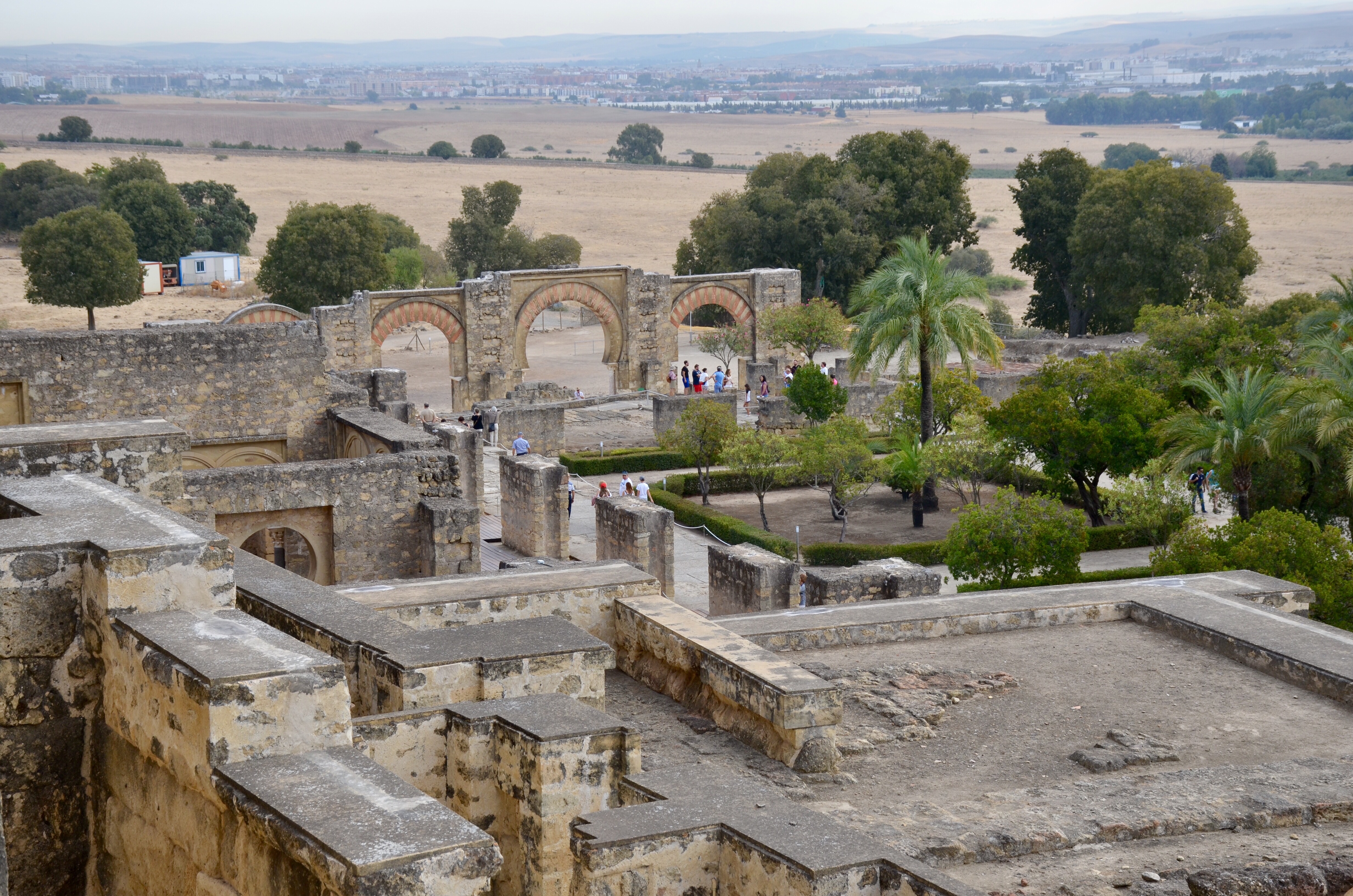
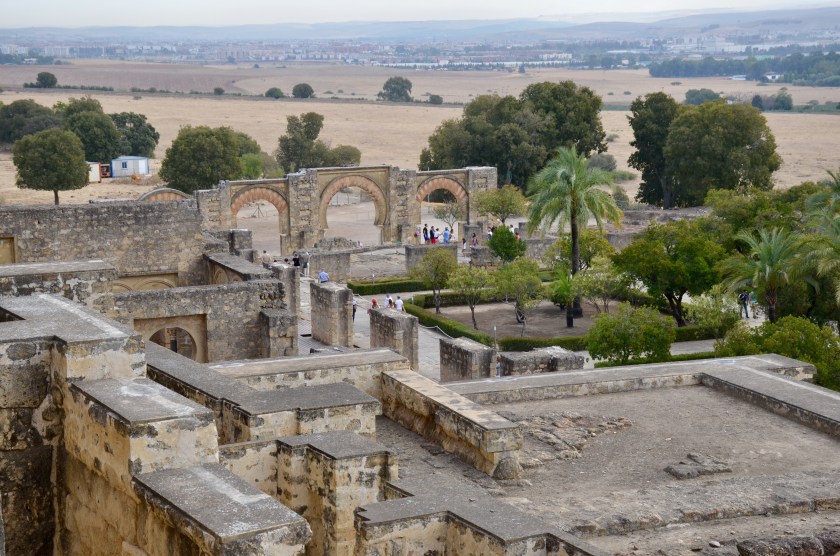
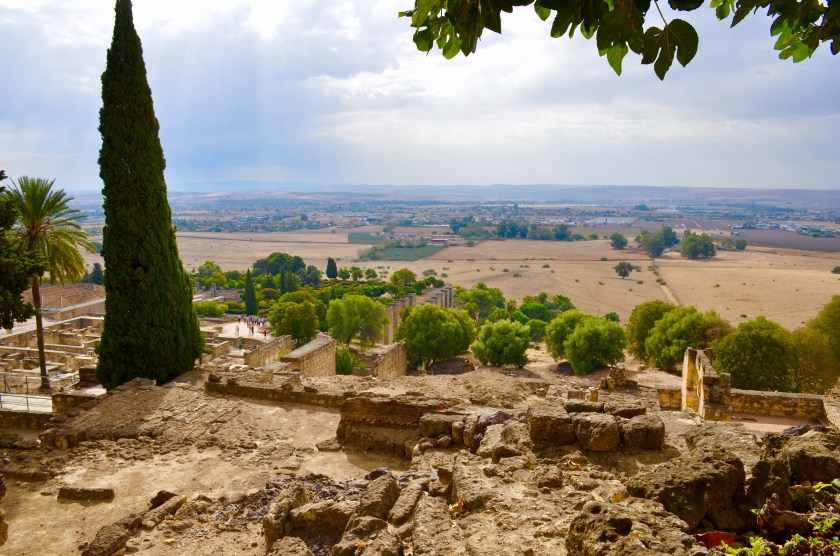
We caught a taxi to our next stop, the active archaeological site at Madinat al-Zahra, a few kms outside Cordoba. Madinat al-Zahra is the ruins of a city constructed by Abderraman III the first Caliph of Al-Andalus in 936 (http://www.andalucia.org/en/cultural-tourism/visits/cordoba/museum/conjunto-arqueologico-medina-azahara/). We wandered around the mostly reconstructed city and visited the on-site museum to watch a video showing what life would have been like in the city in the 10th and 11th centuries.
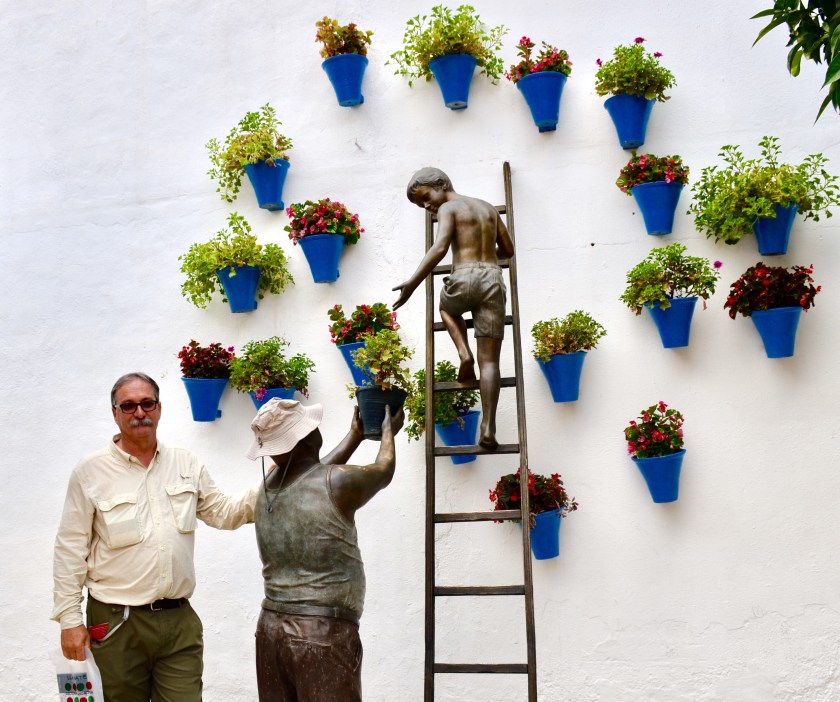
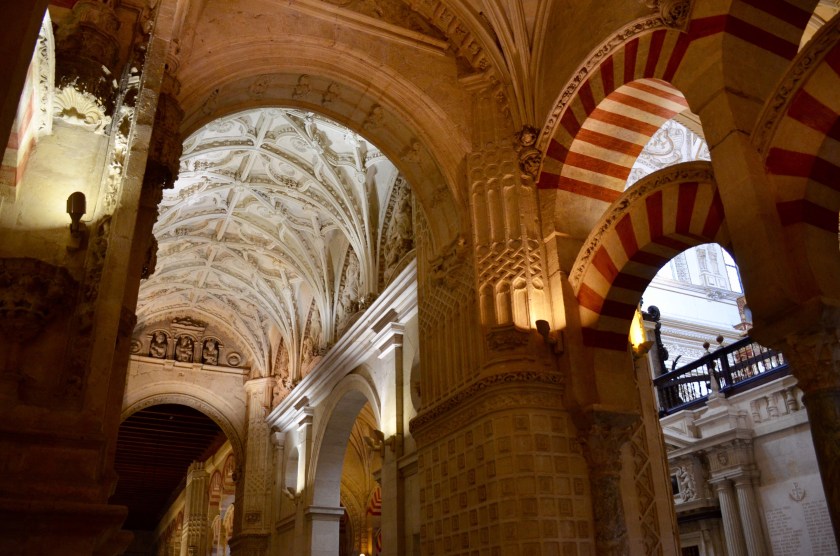
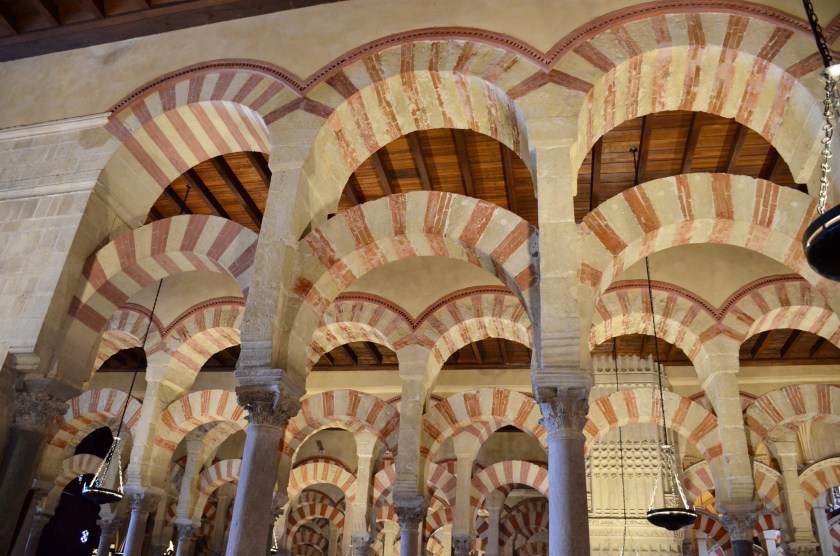
Our taxi then dropped us back in Cordoba and we walked to the remarkable Mezquita-Catedral de Córdoba. The Mesquita, which features a Rennaisance cathedral inside a Medieval mosque, is believed to stand on the site of an early middle ages Visigoth church which was demolished in 784 to make way for the construction of the Great Mosque, which was extended numerous times during the Muslim period before the Christian Reconquista when the centre was converted to a cathedral https://en.wikipedia.org/wiki/Mosque–Cathedral_of_Córdoba). As we walked around the enormous interior, our guide pointed out the different architectural styles, indicating extensions and changes to the building. We lunched at one of our guide’s favourite restaurants on Cordoban specialities and finished our tour after visiting the Synagogue and wandering through the alleyways that were decorated with hanging baskets, sculptures and statues.



Seville
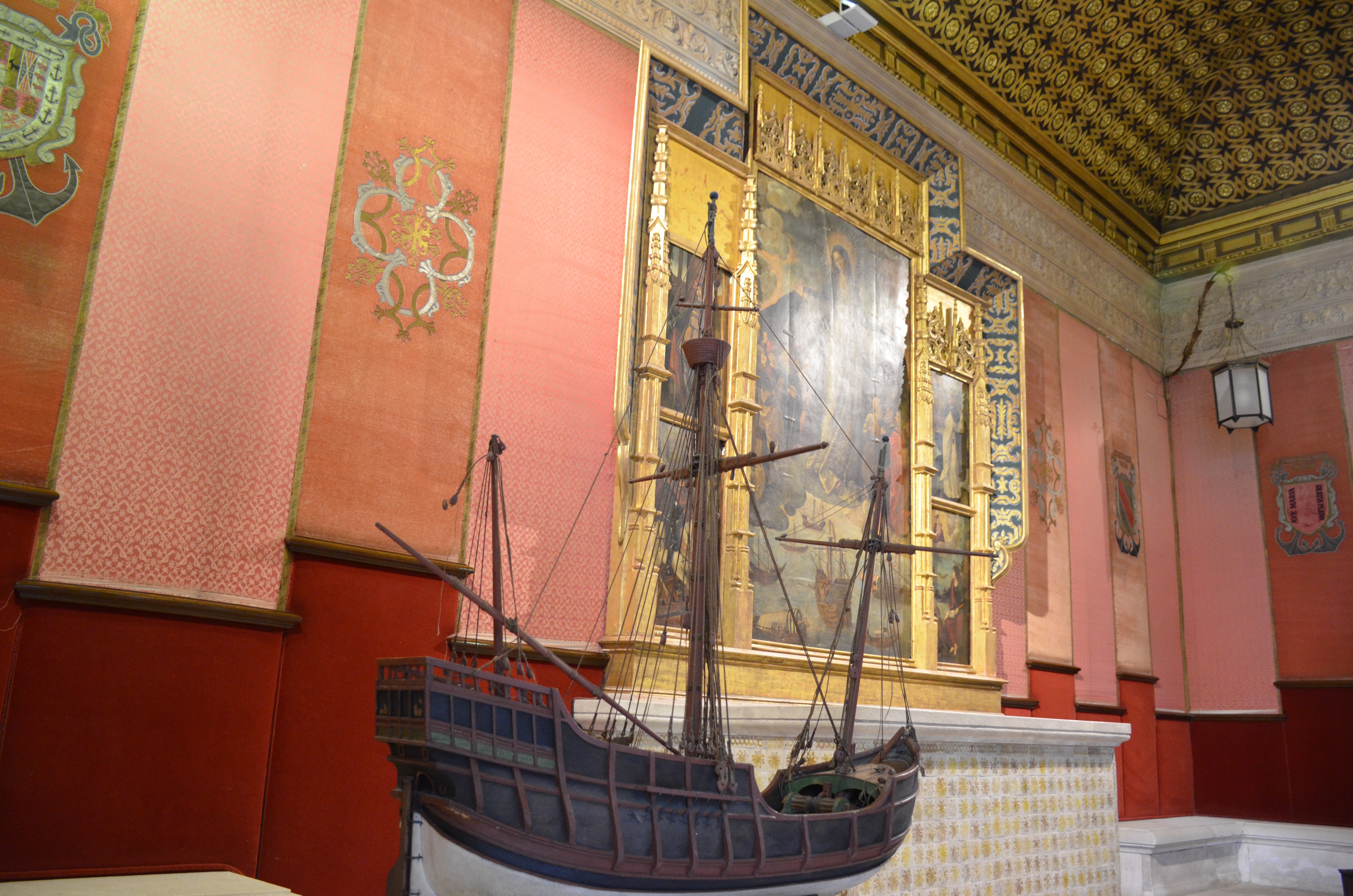
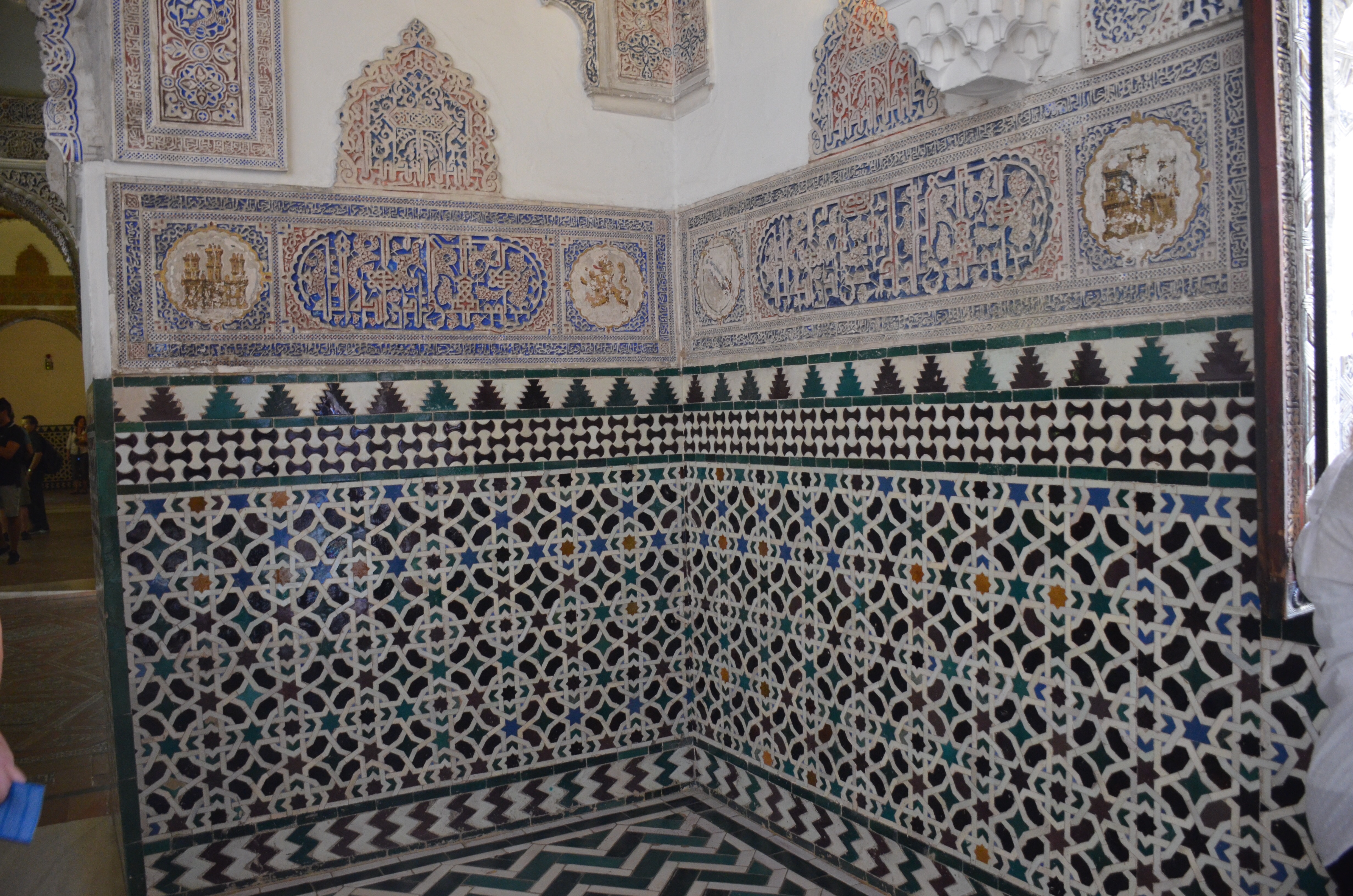
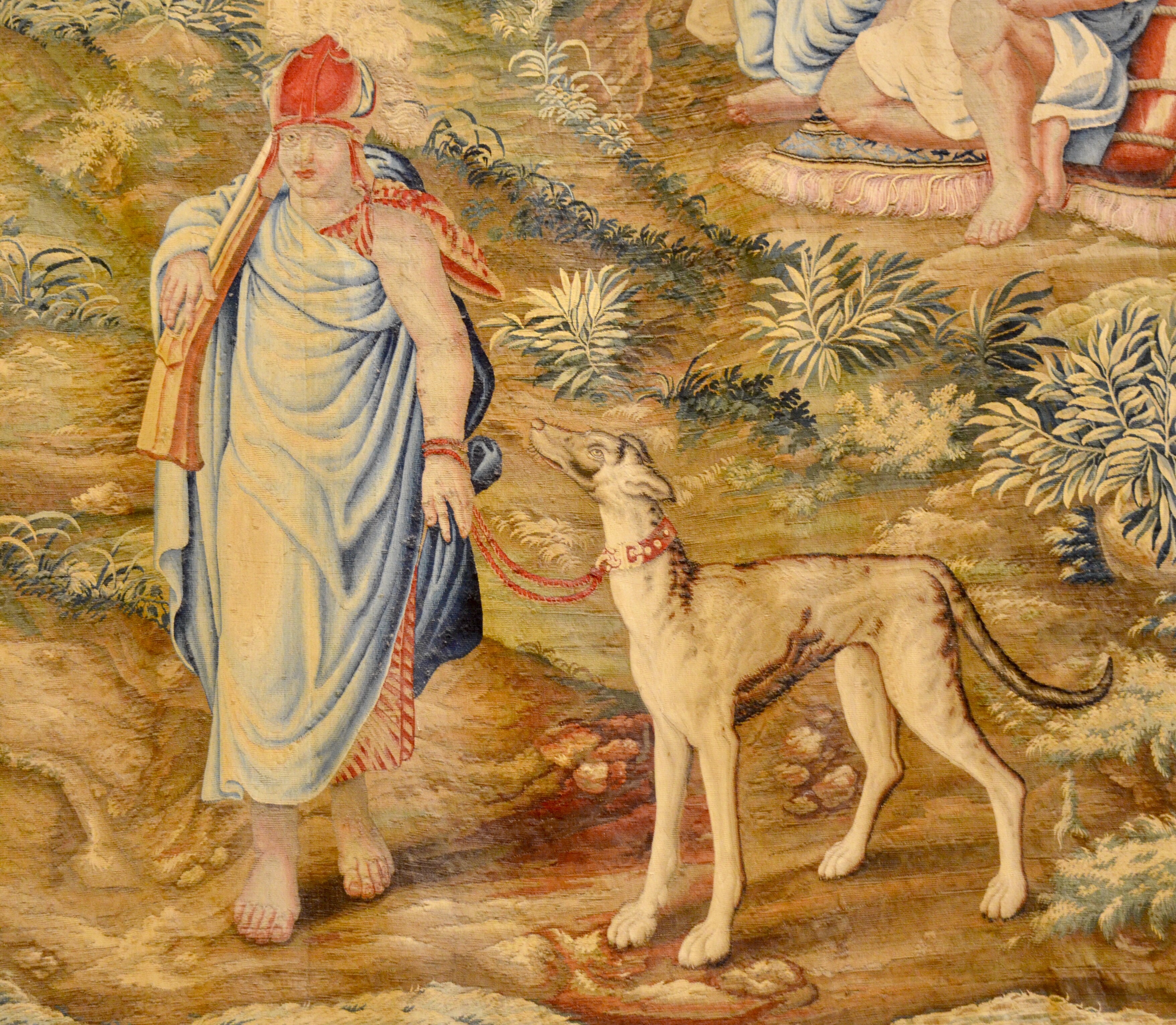
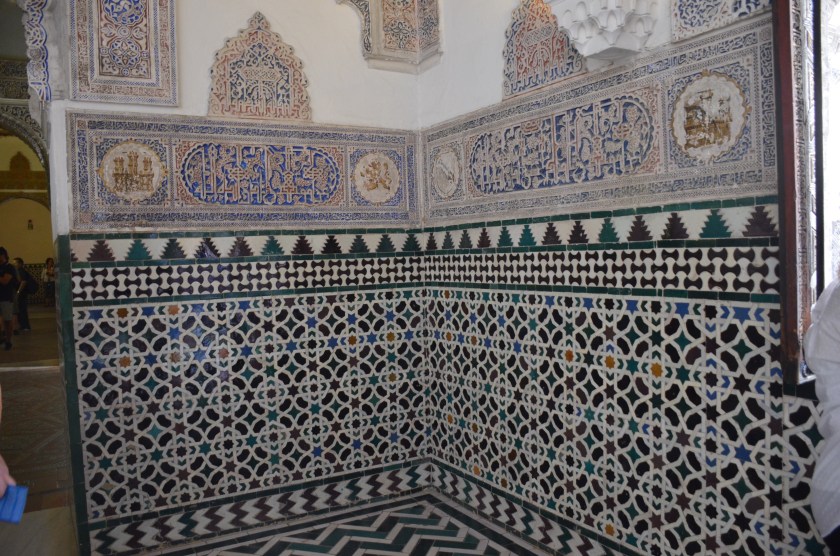
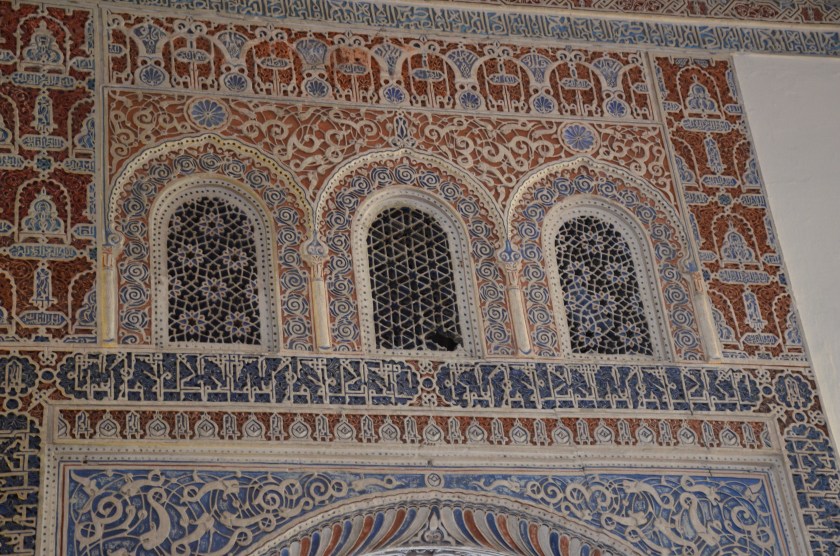
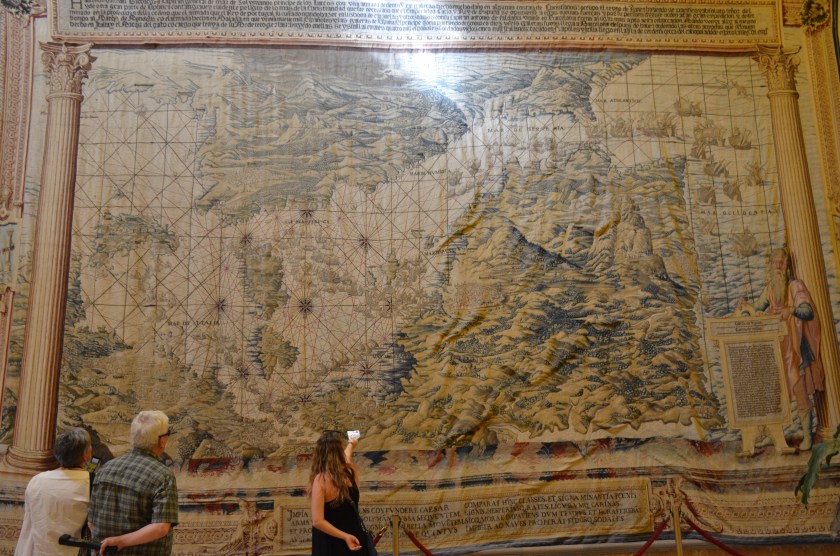
The next day, we caught the train to Seville to visit Real Alcazar de Sevilla. The Alcazar was built as a Royal Palace during the Muslim period and has been used continuously since, with the current Spanish royal family still maintaining apartments. It was designated as a UNESCO world heritage site in 1987 and is one of the most popular tourist destinations in Spain (https://en.wikipedia.org/wiki/Alcázar_of_Seville). Because of the continuity in occupation, the palace has been perfectly preserved and maintained. Many of the buildings retain their original designs and décor including Muslim ceramics, some dating to the Muslim period. Enormous, fascinating Flemish tapestries and paintings adorn the walls in other rooms. It would be impossible to not be impressed with the grandeur of the Alcazar. The gardens are also spectacular, with beautiful formal and informal sections and water features. We then headed back to the station, stopping to look at the Metropol Parasol, the world’s largest wooden building (at the time of the article we consulted). We were unable to find the entrance, but from the outside it looked like hundreds of balsa wood planes had been interlocked.




Back to Cordoba
We had booked train tickets for the next afternoon to Madrid, connecting to Barcelona, from where we would start our return journey to Australia. After checking out of the hotel we went back to the old town of Cordoba to look around one last time and to do some shopping. When we were on the train from Madrid a few days before we had met the owners of a pizza restaurant and we decided to go there for lunch. John had looked their restaurant up and found that it was very highly rated. Our walk took us out of the old town and away from the tourist strip. The owners greeted us with delight when we arrived! The restaurant, La Fabbrica, was divided into sections, with each decorated differently. The section we sat in had a tropical theme, complete with bright pink flamingos. There was a great atmosphere, with catchy background music in the that wasn’t too loud to prevent conversation. As we ate (a wonderful gorgonzola and pear pizza and an interesting salad) the place filled up with local families enjoying time together and a good meal. It was a great way to end our visit to Cordoba!


Barcelona
Once again, the trains were very comfortable and once again we wondered if such a service could operate profitably in Australia. We arrived in Barcelona just before midnight and walked to our hotel, only 5 minutes away. We had only allocated one day to Barcelona because of the ongoing political instability caused by the call for Catalan independence from Spain. Since we had been in Spain, we had seen reports about mass protest rallies, both for and against independence, in the centre of Barcelona. We didn’t want to become caught up in a rally or have our plans disrupted. On top of that, our late arrival meant we were tired and we also had to pack our bags for a 6am flight the following day. That didn’t leave us much time to see Barcelona!
After breakfast we caught a taxi to Las Ramblas, the main tourist strip in Barcelona and also the site of the recent terrorist attack, where a van was deliberately driven into pedestrians. It was obvious that the authorities remained on high alert with a strong police presence on motorbikes, heavily armed on foot and vigilant in cars. As we walked towards the harbour, the concentration of tourists increased rapidly. Although we had always been with other tourists since we arrived, this was on an entirely different scale! To escape, we went into the Maritime Museum, which is on the site of the 13th century shipyards which drove Barcelona’s supremacy in the Mediterranean during the Middle Ages. The centrepiece was the full-size replica of the Real Galley, which was the flagship of Don Juan de Austria in the Battle of Lepanto in 1571. Key facts we learnt about galleys included: prisoners and slaves were shackled in place as rowers, never being released to sleep, walk around or go to the toilet; the expected lifespan of a rower was no more than 2 years and galleys stunk so much that they were could be smelled before they were seen. We then looked for a seafood restaurant for lunch at the harbour. The one we found was enormous, probably catering to cruise ship passengers. We enjoyed a good seafood paella, which we decided was a “must do” before we left Spain.
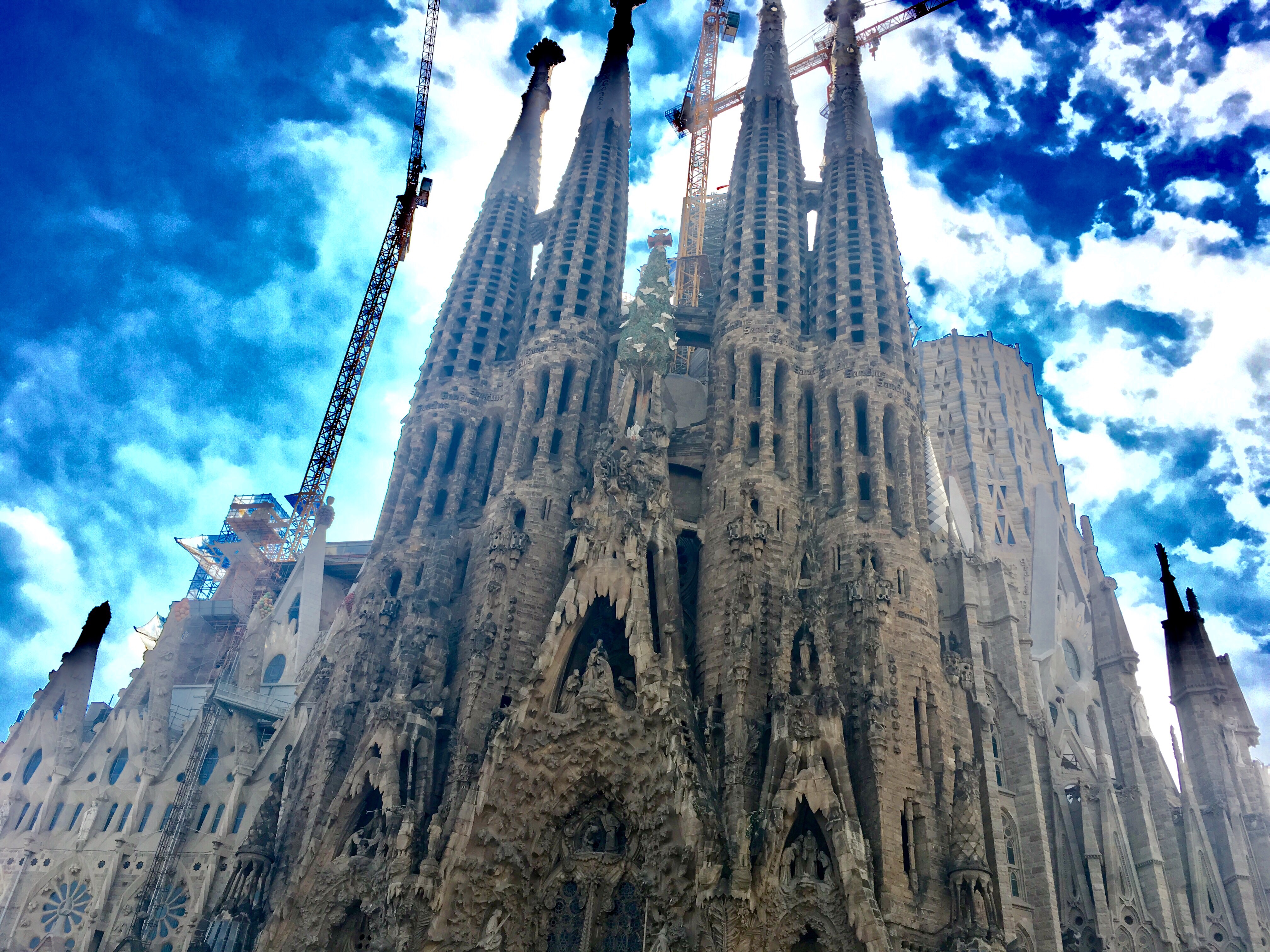
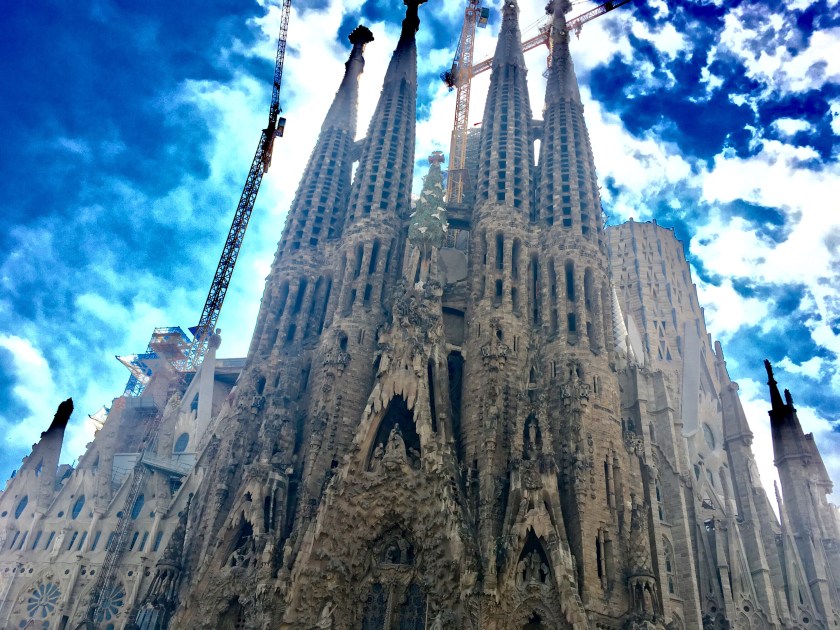
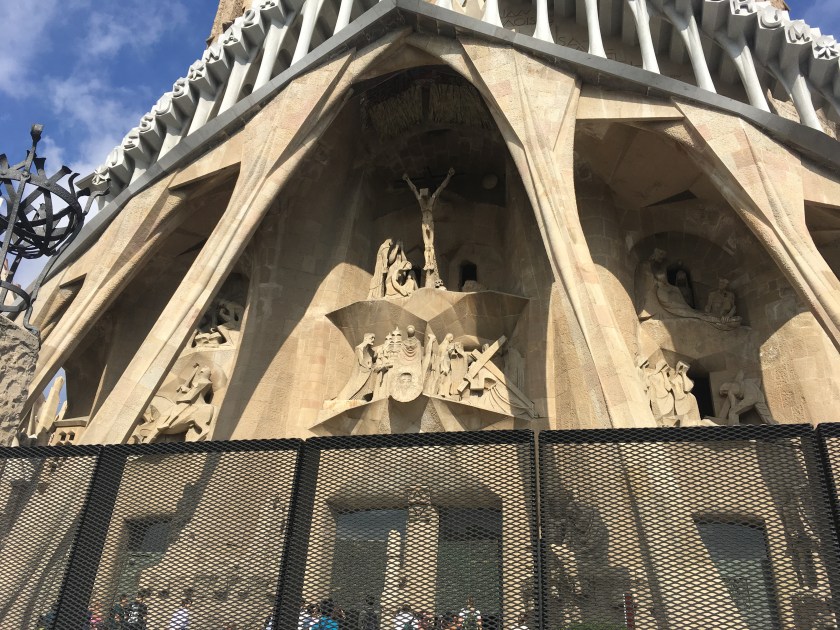
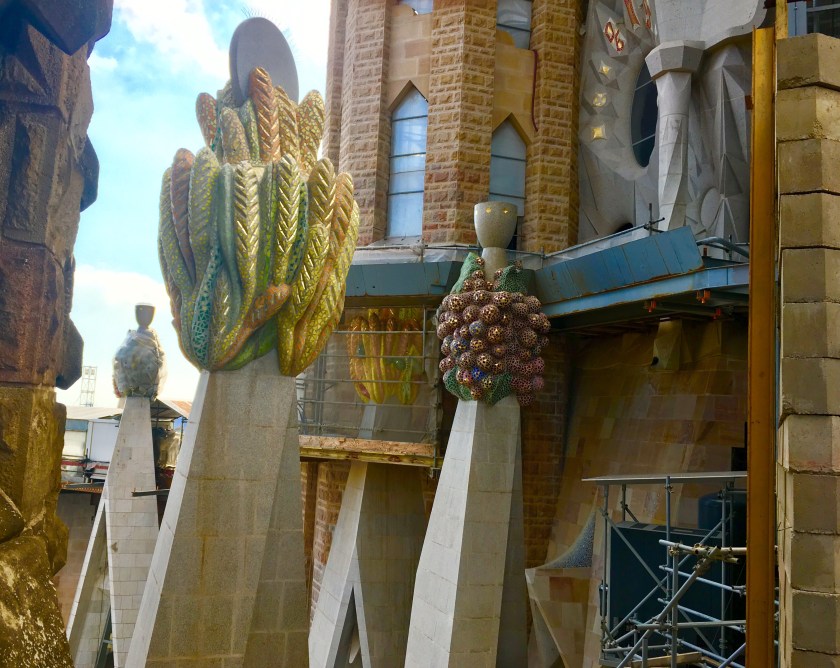
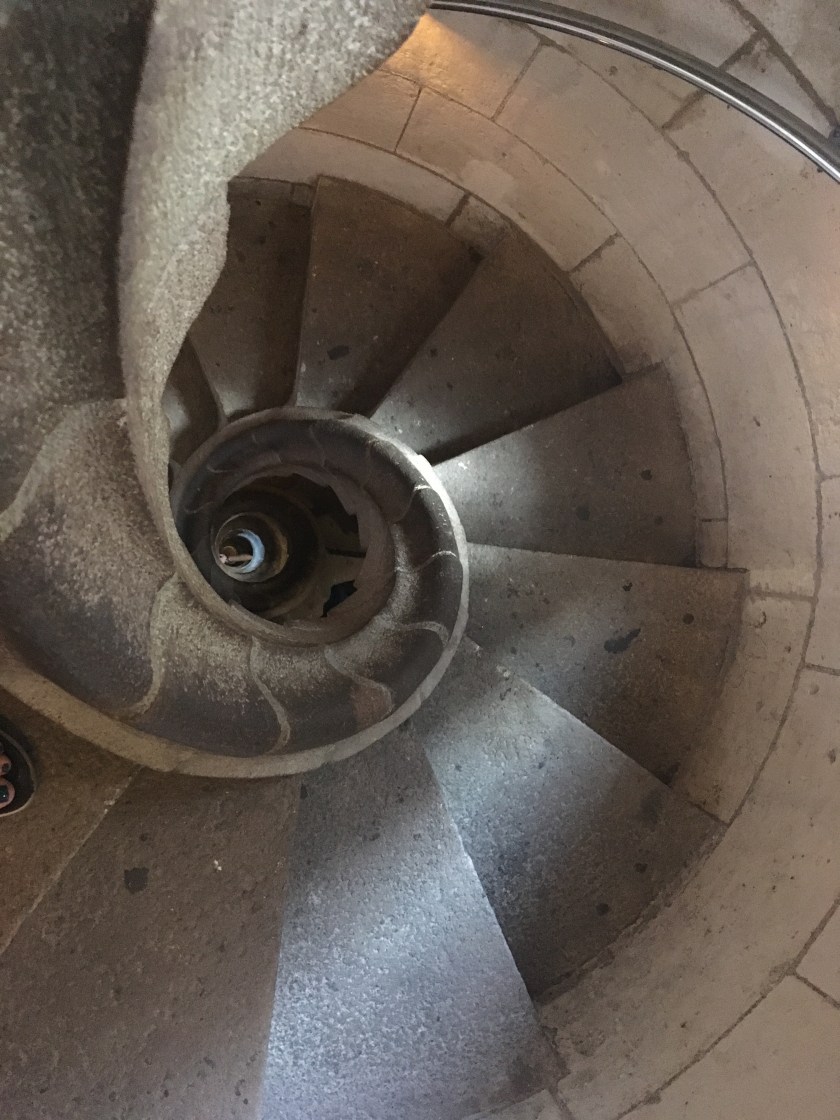
A few days beforehand, John had booked tickets to Sagrada Familia, the basilica designed by Antoni Gaudi and which has been under construction since 1882. We had seen two of Gaudi’s other buildings – the merchant’s house in Leon and the bishop’s palace in Astorga. However, neither prepared me for Sagrada Familia. From the outside, it’s towering spires and Spanish late Gothic/Catalan modernism/Art Nouveau architecture (https://en.wikipedia.org/wiki/Sagrada_Família) are awe-inspiring. Some of the spires were topped with carvings of vegetables and other parts looked like Christmas decorations, although I’m sure they had a more serious meaning. After touring several cathedrals on the Camino, at first sight the Sagrada Familia looked almost like a caricature (at least to me, I willingly admit I have absolutely no knowledge of art or architecture). However, once inside, we could identify the familiar spaces we had seen in the older cathedrals. The glorious red, orange, yellow, green and blue stained glass windows signified the seasons and the huge pillars, of different types of stone, signified the forest. The inside was light and airy, certainly different from the dark Romanesque and Gothic cathedrals we had seen earlier. John had also booked tickets to go up one of the towers. From the top we gained a different perspective of the outside of the building. It is magnificent! Like the other cathedrals, Sagrada Familia made me think of Ken Follet’s book, “Pillars of the Earth” which is about the building of a cathedral in the 12th century. What awe the local people must have felt watching the cathedral grow! I must read it again!
We then returned to the hotel, eating in the restaurant because we had yet to pack and since we needed to be at the airport at 4am, we needed to go to bed early. Our last Spanish meal was excellent and we had a great view over the city from the 23rd floor. We checked out early the next morning, on our way home. We arrived as the airport was just opening. Only a couple of coffee shops were open and the biggest non-passenger presence were the armed police. It felt like a sad note on which to be leaving Spain and to end a fantastic holiday.
 Talking the walk: A non-believer's journey along the Camino de Santiago